How to Estimate the Rental Value of a House in Languedoc
Reading time: 12 minutes
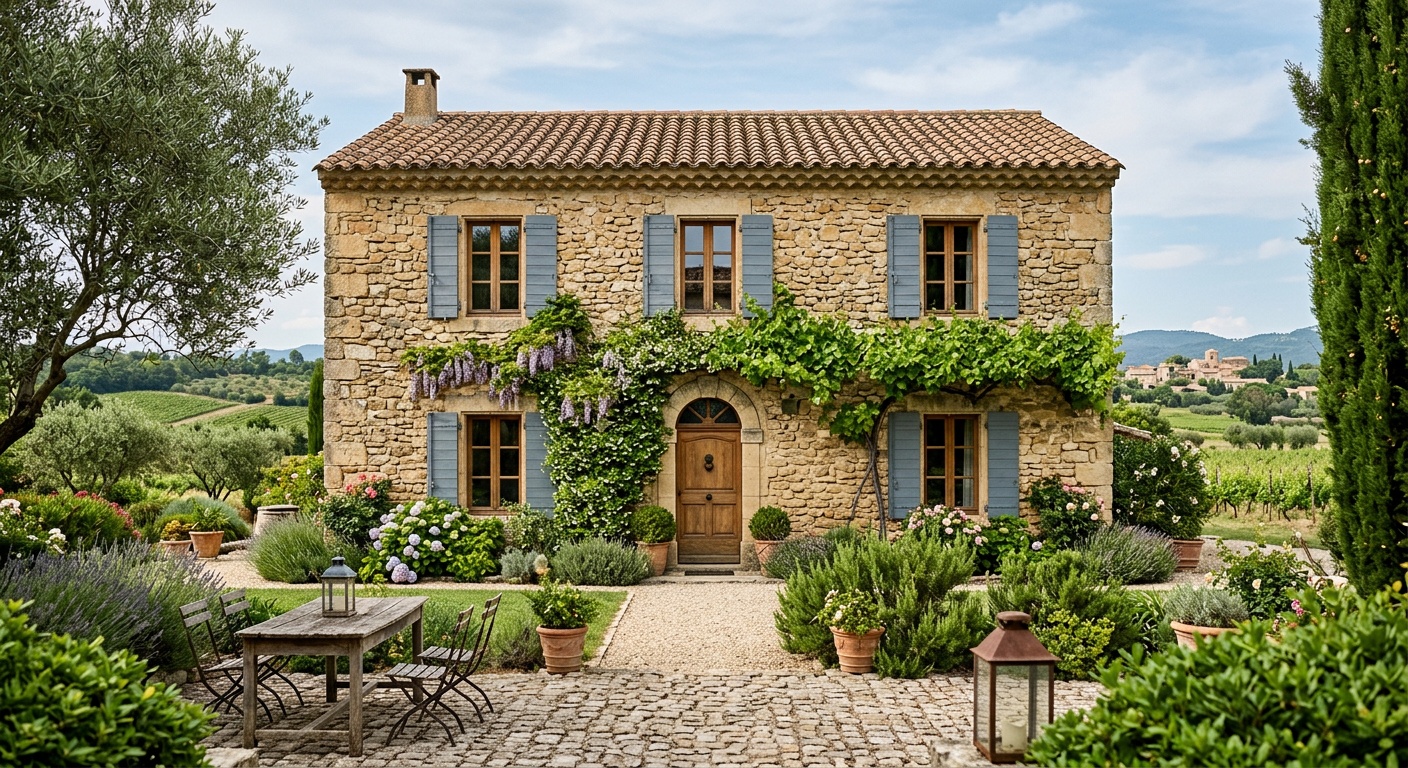
You’ve inherited a stone farmhouse near Montpellier. Or perhaps you’ve just closed on a village property in the Hérault countryside. Either way, one urgent question sits at the top of your list: What can I realistically charge in rent? Get it wrong in either direction, and you’re either leaving money on the table or watching the property sit vacant for months.
Estimating rental value in Languedoc isn’t as straightforward as plugging numbers into a national calculator. This region — stretching across Gard, Hérault, Aude, Lozère, and Pyrénées-Orientales — has its own rhythms, micro-markets, and seasonal pressures that national averages simply don’t capture. But with the right framework, you can arrive at a defensible, market-accurate rental figure with confidence.
Let’s break it down, step by step.
Table of Contents
- Understanding the Languedoc Rental Market in 2026
- Key Factors That Determine Rental Value
- Step-by-Step Estimation Methods
- Seasonal vs. Long-Term Rental: Choosing Your Strategy
- Tools and Resources for Accurate Valuation
- Common Challenges and How to Overcome Them
- Comparative Rental Data Across Languedoc
- Frequently Asked Questions
- Your Rental Pricing Roadmap: Next Steps
Understanding the Languedoc Rental Market in 2026
Languedoc has undergone a significant real estate transformation over the past five years. Once considered a quieter alternative to Provence or the Côte d’Azur, the region has attracted a steady influx of remote workers, retirees from Northern Europe, and domestic buyers priced out of Paris and Lyon. By 2026, this demand has meaningfully pushed rental values upward — particularly in the coastal belt and university-anchored cities like Montpellier.
According to data from the Observatoire des Loyers de l’Agglomération de Montpellier (OLAP Montpellier), median rents in Montpellier rose by approximately 4.2% year-on-year in 2025, reaching an average of €14.80 per square metre per month for unfurnished apartments. Houses with gardens in peri-urban zones have commanded even stronger premiums — often 15–20% above equivalent urban apartments, driven by post-pandemic lifestyle preferences that haven’t faded.
Meanwhile, in rural areas like the Cévennes valleys or the Aude plains, rental yields tell a very different story. Supply has grown faster than demand in some communes, and the risk of prolonged vacancy is real. Understanding which sub-market your property belongs to is the single most important step in the valuation process.
“The Languedoc rental market is not one market — it’s twenty. A property in Sète commands very different dynamics than one in Carcassonne or Saint-Chinian. Investors who treat them as equivalent almost always misprice.” — Pierre-Henri Garrel, independent property consultant, Montpellier, 2025
Key Factors That Determine Rental Value
Before you run any comparisons or apply any formula, you need to understand the specific levers that drive rent in this region. Here’s what really moves the needle:
Location and Micro-Market Dynamics
In Languedoc, location isn’t just about the département — it’s about proximity to specific amenities, infrastructure, and lifestyle anchors. The key variables include:
- Distance to the coast: Properties within 20 km of the Mediterranean consistently achieve 25–40% higher rents than comparable inland properties, both for seasonal and annual lets.
- University proximity: Montpellier hosts over 80,000 students. Properties within cycling distance of the Faculté de Médecine or the Odysseum campus face virtually no vacancy issue from September through June.
- TGV or motorway access: Villages near Nîmes or Béziers train stations attract remote workers commuting occasionally to Paris or Lyon, supporting annual rental demand.
- Village vs. isolated: A house within a village with services (baker, school, pharmacy) will rent faster and at higher rates than an equivalent mas 5 km down an unmarked road.
Property Characteristics That Buyers and Renters Prioritise
Beyond location, the physical attributes of your house directly translate into rental premium or discount. In 2026, tenants in Languedoc are increasingly driven by energy costs and outdoor space — both factors that have gained enormous weight since utility price volatility began in 2022.
- Energy Performance Certificate (DPE) rating: Under French law as updated in 2025, properties rated F or G cannot be offered for new long-term rental contracts. A DPE rating of B or C now commands a measurable rent premium of 8–12% over an equivalent D-rated property.
- Outdoor space: A private garden, terrace, or pool adds significant value — especially for seasonal lets. Pools alone can double weekly seasonal rates.
- Parking: In historic town centres (Nîmes, Béziers, Pézenas), dedicated parking can add €50–€80 per month to achievable rent.
- Air conditioning: Given Languedoc summers regularly exceed 35°C, functioning reversible air conditioning is no longer a luxury — it’s an expectation, especially for any property targeting professionals or families.
- Surface area and layout: Renters pay for usable space, not gross m². A well-configured 90 m² house often outperforms a poorly laid out 110 m² equivalent.
Step-by-Step Estimation Methods
There are four reliable approaches to estimating rental value, and the strongest analysis triangulates across at least three of them. Think of this as building a case, not looking for a single answer.
Method 1: Comparative Market Analysis (CMA)
This is your foundation. The goal is to identify 5–8 recently let properties that are genuinely comparable to yours in the same micro-market — similar size, type, condition, and location — and analyse what they rented for.
Where to find this data in 2026:
- SeLoger, Leboncoin, PAP.fr: Search active listings to understand current asking rents. Note that actual signed rents are typically 3–7% below asking in slower markets.
- Local agency mandates: Two or three conversations with agents active in your commune will give you real transaction data they won’t publish online.
- DVF (Demande de Valeurs Foncières): While primarily a sales tool, this government database helps you understand the ownership and transaction profile of comparable properties.
Quick Scenario: You own a 4-bedroom stone house in Pézenas, 120 m², with a small garden and no pool, DPE rated D. You find six comparable lets in the area: four village houses between 110–130 m² priced between €950 and €1,150/month, and two slightly larger properties at €1,200. Excluding the outliers, your CMA suggests a range of €980–€1,100 for your property.
Method 2: Price Per Square Metre Benchmarking
Once you have your CMA range, validate it using regional per-m² benchmarks. This catches cases where your comparable set is inadvertently skewed by anomalies.
In 2026, the approximate ranges for unfurnished annual lets in Languedoc are:
- Montpellier city centre: €13–€16/m²/month
- Montpellier inner suburbs (Lattes, Castelnau-le-Lez): €11–€14/m²/month
- Coastal towns (Sète, La Grande-Motte, Agde): €10–€15/m²/month (highly seasonal-dependent)
- Nîmes city: €9–€12/m²/month
- Carcassonne and Béziers: €7–€10/m²/month
- Rural Hérault and Aude villages: €5–€8/m²/month
Apply the appropriate band to your usable floor area. If the result aligns with your CMA, you’re likely on solid ground. If there’s a significant divergence, investigate why before proceeding.
Method 3: Gross Yield Calibration
Investors use this approach to reality-check rental income against purchase price. If you know what similar properties sold for recently, you can work backward from market yield expectations to confirm your rent estimate is credible.
In 2026, gross rental yields in Languedoc typically range from 4.5% to 7.5% depending on location, with the highest yields found in Béziers and Carcassonne (where purchase prices remain low relative to rents) and the lowest in coastal Montpellier periphery.
Formula: Annual Rent ÷ Purchase Price × 100 = Gross Yield %
Example: If comparable houses in Pézenas sell for €220,000 and local investors expect a 5.5% gross yield, implied annual rent = €12,100, or approximately €1,008/month — which aligns neatly with the CMA range above.
Method 4: Professional Valuation
For any property where significant investment decisions hang on the number, commission a formal évaluation locative from a certified expert immobilier or a notaire with local market knowledge. This costs between €300–€600 but provides a defensible, documented valuation that’s useful for insurance, inheritance, or legal purposes. In 2026, several agencies in Montpellier and Nîmes now offer digital rental appraisals with turnaround times of 48–72 hours.
Seasonal vs. Long-Term Rental: Choosing Your Strategy
This decision fundamentally changes your rental value calculation — and your workload. Languedoc is one of France’s premium seasonal rental regions, with peak demand running from late June through early September, and a growing shoulder season in May and October driven by outdoor tourism (cycling, wine touring, walking holidays).
Seasonal rental potential (weekly rates, 2026 estimates for a 4-bedroom house with pool):
- Peak July–August: €2,500–€4,500/week
- Shoulder May–June, September–October: €1,200–€2,200/week
- Low season: typically 4–8 weeks of bookings maximum
If you achieve 10 weeks of seasonal occupancy at average weekly rates, gross income may reach €25,000–€35,000 — significantly above what long-term letting would generate for a typical rural Languedoc property. However, after platform fees (Airbnb, Vrbo typically charge 3–5% on owner side plus 14–15% on guest side), cleaning, maintenance, and vacancy periods, net income often settles 30–40% below gross.
The honest trade-off: Long-term lets offer predictability, lower management intensity, and legal simplicity. Seasonal lets offer higher ceilings but require active management, marketing investment, and tolerance for income variability. Many owners in 2026 are experimenting with hybrid models — seasonal in summer, medium-term (3–6 month) lets to winter sun seekers or digital nomads in the off-season.
Tools and Resources for Accurate Valuation
You don’t have to estimate blindly. Several tools are now available to Languedoc landlords:
- Meilleurs Agents (meilleursagents.com): Offers rental estimate tools by postcode, with data that’s updated quarterly. Accuracy varies by commune density — stronger in cities, weaker in rural areas.
- Locservice.fr rental observatory: Tracks real transaction rents across French cities, including Montpellier, Nîmes, and Perpignan.
- ADIL 34 (Agence Départementale d’Information sur le Logement): Free advisory service for landlords in Hérault. Their advisors can provide context on local market norms and legal compliance simultaneously.
- Notaire.fr: Notaires publish regional real estate statistics quarterly. The 2025 Languedoc-Roussillon edition confirmed rental price growth was strongest in the Hérault coastal strip and slowest in Lozère.
- AirDNA (for seasonal): Subscription tool that analyses Airbnb and Vrbo booking data by postcode, showing average daily rates, occupancy rates, and seasonal patterns for your specific market.
Common Challenges and How to Overcome Them
Even well-researched estimates can go wrong. Here are the three most common pitfalls landlords encounter in Languedoc — and concrete ways to avoid them.
Challenge 1: Overvaluing Rural Properties Based on Emotional Attachment
It’s natural to see your restored stone mas as exceptional. But the rental market is unsentimental. If comparable rural properties in your commune sit on the market for 60+ days, your asking rent is likely above market. The fix: anchor every decision to transaction data, not listing data. Ask three local agents what they’d realistically expect to achieve — not what they’d list it for.
Challenge 2: Ignoring DPE Compliance Risk
In 2025, France tightened enforcement on energy-rated F and G properties. If your house falls in these categories, you cannot legally offer new long-term tenancies. Before estimating rental value, confirm your DPE rating and factor renovation costs into your timeline. Properties upgraded from F/G to D or better in 2025–2026 typically recovered renovation costs within 18–24 months through higher achievable rents.
Challenge 3: Underestimating Seasonal Vacancy
Seasonal lets look brilliant on paper until you account for the weeks you won’t fill. In 2026, the competitive landscape on Airbnb in coastal Languedoc is intense — Sète alone has over 800 active listings. Build a conservative occupancy scenario (60–65% of peak weeks booked) into your model before committing to a seasonal-only strategy.
Comparative Rental Data Across Languedoc
| Location | Avg. Rent/m²/month (Unfurnished) | Typical Annual Yield | Seasonal Premium | Vacancy Risk |
|---|---|---|---|---|
| Montpellier Centre | €14–€16 | 4.0–5.0% | Moderate | Low |
| Sète / Coastal Hérault | €10–€15 | 4.5–6.0% | Very High | Low–Medium |
| Nîmes | €9–€12 | 5.0–6.5% | Low | Low–Medium |
| Béziers / Carcassonne | €7–€10 | 6.0–7.5% | Moderate (tourism) | Medium |
| Rural Hérault / Aude | €5–€8 | 5.5–7.0% | High (seasonal only) | Medium–High |
Rental Value Comparison: Average Monthly Rent for a 100m² House by Location (2026)
Frequently Asked Questions
Is it mandatory to register a seasonal rental property in Languedoc?
Yes. Since 2019, and further reinforced by legislation updated in 2025, any property let as a meublé de tourisme must be declared to your local mairie. In classified tourist communes (which includes most coastal Languedoc towns and cities like Montpellier), owners may also need to apply for a change-of-use authorisation and obtain a registration number for platforms like Airbnb. Failure to comply risks fines of up to €5,000 per infraction. The ADIL or your local tourist office can confirm the specific rules for your commune.
How does the DPE rating affect how much rent I can legally charge?
Directly and significantly. Since January 2025, properties with a G rating cannot be offered on new annual rental contracts anywhere in France, including Languedoc. F-rated properties face similar restrictions from 2028. Beyond legality, market data from 2025 shows that B and C-rated properties achieve rents 8–12% higher than D-rated equivalents in the Montpellier area, as energy-conscious tenants — especially younger professionals — actively filter by energy rating when searching. Improving your DPE is therefore both a compliance issue and a commercial opportunity.
Should I use a local property manager or manage my rental independently?
It depends on your proximity and availability. A professional gestionnaire locatif in Languedoc typically charges 6–10% of annual rent for long-term management, or 20–30% of booking revenue for seasonal management. For absentee landlords — particularly international owners common in this region — management fees are often well-justified by reduced vacancy, proper maintenance oversight, and legal compliance. Local agencies in Montpellier, Nîmes, and along the coast with specialist seasonal portfolios often achieve occupancy rates 15–20% higher than self-managed equivalents, through established booking pipelines and professional photography.
Your Rental Pricing Roadmap: Next Steps
You now have a solid framework. Here’s how to put it into action over the next four weeks:
- Week 1 — Confirm your DPE rating. If it’s F or G, get quotes for remediation immediately. Everything else depends on this being resolved. If it’s D or above, proceed with confidence.
- Week 2 — Run your CMA. Identify 5–8 comparable properties on SeLoger and Leboncoin. Note their asking rents, days on market, and any distinguishing features. Call two local agencies for off-market insight.
- Week 3 — Cross-validate with the per-m² method and yield calibration. If all three approaches point to a similar range, you have your anchor number. If they diverge, investigate the cause before proceeding.
- Week 4 — Decide on let type and set your strategy. If seasonal, model conservative occupancy (60–65%) against platform fees and management costs. If annual, benchmark against current tenant demand indicators — how fast are comparable properties being let?
- Ongoing — Revisit annually. Languedoc rents are in motion. Rebuild your CMA each spring, especially in coastal areas where seasonal platform rates shift meaningfully year to year.
The broader trend is clear: Languedoc is becoming increasingly attractive to both domestic and international tenants, and property that’s well-priced, energy-efficient, and properly managed will consistently outperform the market average. The landlords who treat rental pricing as a living process — not a one-time guess — are the ones building durable, profitable portfolios in this region.
Here’s your challenge: Before you set a rent figure, ask yourself — “Can I defend this number with three independent data points?” If yes, you’re ready to go to market. If not, one more week of research will make the difference between a property that attracts quality tenants quickly and one that quietly bleeds vacancy costs while you wonder what went wrong.