Family-Friendly House Rentals in the Languedoc Region Explained
Reading time: 14 minutes
Picture this: two exhausted parents, three kids bouncing off the walls of a cramped hotel room, a minibar that costs €8 per water bottle, and a restaurant menu that stubbornly refuses to offer anything without truffle foam. Sound familiar? If you’ve ever tried to plan a family holiday in the south of France through conventional means, you already know the struggle. But here’s the good news — the Languedoc region offers something genuinely extraordinary for families willing to look beyond the tourist-brochure surface: spacious, well-equipped house rentals that transform a good holiday into an unforgettable one.
Languedoc, stretching across the southern arc of France between the Pyrenees and the Rhône, is one of Europe’s most underrated family destinations in 2026. It delivers Mediterranean sunshine, medieval hilltop villages, stunning gorges, vineyards, and coastline — all at prices that won’t require a second mortgage. This guide cuts through the noise, explains exactly how the rental market works, what to look for, and how to secure the right property for your family’s needs.
Table of Contents
- Why Languedoc? The Family Holiday Case in 2026
- Understanding the Rental Landscape
- Types of Family-Friendly Properties
- Key Sub-Regions and Where to Stay
- What to Look For: The Family Checklist
- Pricing, Seasons, and Smart Budgeting
- Booking Platforms and Avoiding Pitfalls
- Common Challenges and How to Solve Them
- Frequently Asked Questions
- Your Languedoc Family Holiday: A Practical Roadmap
Why Languedoc? The Family Holiday Case in 2026
Let’s be honest — Provence gets all the glamour, the Côte d’Azur gets the celebrities, and Languedoc quietly gets on with being one of France’s most liveable, accessible, and genuinely welcoming regions for families. In 2026, that reputation has solidified significantly.
According to data from the Comité Régional du Tourisme Occitanie, family tourism in the broader Occitanie region (which encompasses historic Languedoc) grew by 11% between 2024 and 2025, with villa and house rentals specifically accounting for 63% of all accommodation bookings by families with children. That’s a striking statistic — and it tells you something important about how families are travelling today.
The region’s appeal is multidimensional. You get approximately 300 days of sunshine annually across most of the coastal and inland zones. You get access to the Canal du Midi (a UNESCO World Heritage Site), the wild Cévennes National Park, the medieval fortified city of Carcassonne, the beaches of the Hérault coastline, and the extraordinary Gorges du Tarn — all within reasonable driving distance of most rental bases.
Crucially for families, Languedoc remains notably more affordable than Provence or the Riviera. In 2026, average weekly rental costs for a four-bedroom house in the Languedoc are approximately 30–40% lower than equivalent properties in the Luberon or near Nice. That price differential is real, meaningful, and worth building a holiday around.
Understanding the Rental Landscape
The French holiday rental market has matured considerably by 2026. Post-pandemic shifts in travel behaviour — longer stays, preference for private space, demand for outdoor areas — permanently reshaped what families seek and what landlords offer. Languedoc adapted faster than many regions, partly because its stock of traditional stone farmhouses (mas), village houses (maisons de village), and converted agricultural buildings (gîtes) was already well-suited to family occupancy.
The Gîte System: France’s Family Rental Foundation
The concept of the gîte — a self-catering rural holiday rental — is central to understanding Languedoc’s family accommodation market. Gîtes in France are regulated and often accredited through Gîtes de France, the national federation that certifies properties against quality standards using an “épis” (ear of wheat) rating system, from one to five épis. For families, this accreditation matters enormously because it provides a baseline guarantee of cleanliness, equipment, and safety standards.
As of 2026, Gîtes de France lists over 4,200 accredited properties in the Occitanie region alone, of which roughly 1,800 are classified as suitable for families with young children. These include properties with enclosed gardens, pool safety gates, cot and high chair availability, and proximity to child-friendly activities.
Beyond gîtes, the market includes privately listed villas (often with pools), holiday cottages attached to wine domaines, and increasingly, eco-lodges and glamping-adjacent properties that appeal to families wanting something a little different. The ecosystem is rich — but navigating it requires knowing what to look for.
The Rise of Direct Booking and Its Implications
One notable trend shaping the Languedoc rental market in 2026 is the continued growth of direct booking — families contacting property owners directly, bypassing platforms like Airbnb or Booking.com to secure better rates and more personalised service. A 2025 survey by Which? Travel found that 47% of UK families who rented holiday properties in France in 2024 had made at least one booking via direct contact with the owner, citing lower costs (savings of 12–18% on average) and more flexibility around check-in times and special requests.
This shift has pros and cons for families. Direct booking can yield genuine savings and more accommodating hosts. It also removes some of the consumer protections offered by major platforms. We’ll address how to navigate this safely in the booking section.
Types of Family-Friendly Properties
Not all rentals are created equal, and in Languedoc the range is impressively wide. Here’s a practical breakdown of what you’ll find:
Mas (Provençal/Languedocian Farmhouses)
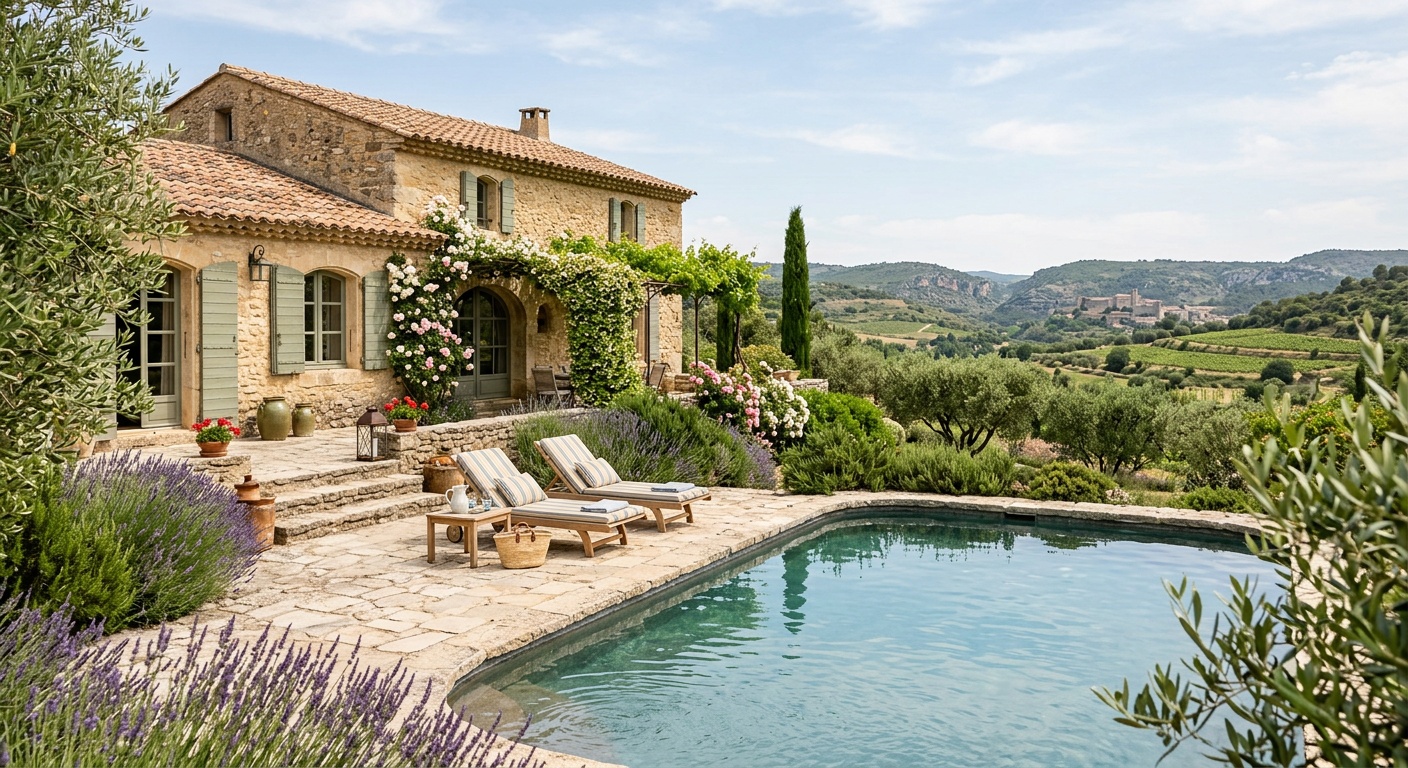
The mas is the quintessential Languedoc property type — a large stone farmhouse, typically with thick walls that keep interiors cool in summer, multiple bedrooms, a generous garden or courtyard, and often a private pool. These properties are ideal for larger families or multi-generational groups. A typical mas rental sleeping 8–10 people in the Hérault department ranges from €2,500 to €5,500 per week in peak season (July–August 2026). They require a bigger budget but deliver proportionally more space, character, and independence.
Village Houses (Maisons de Village)
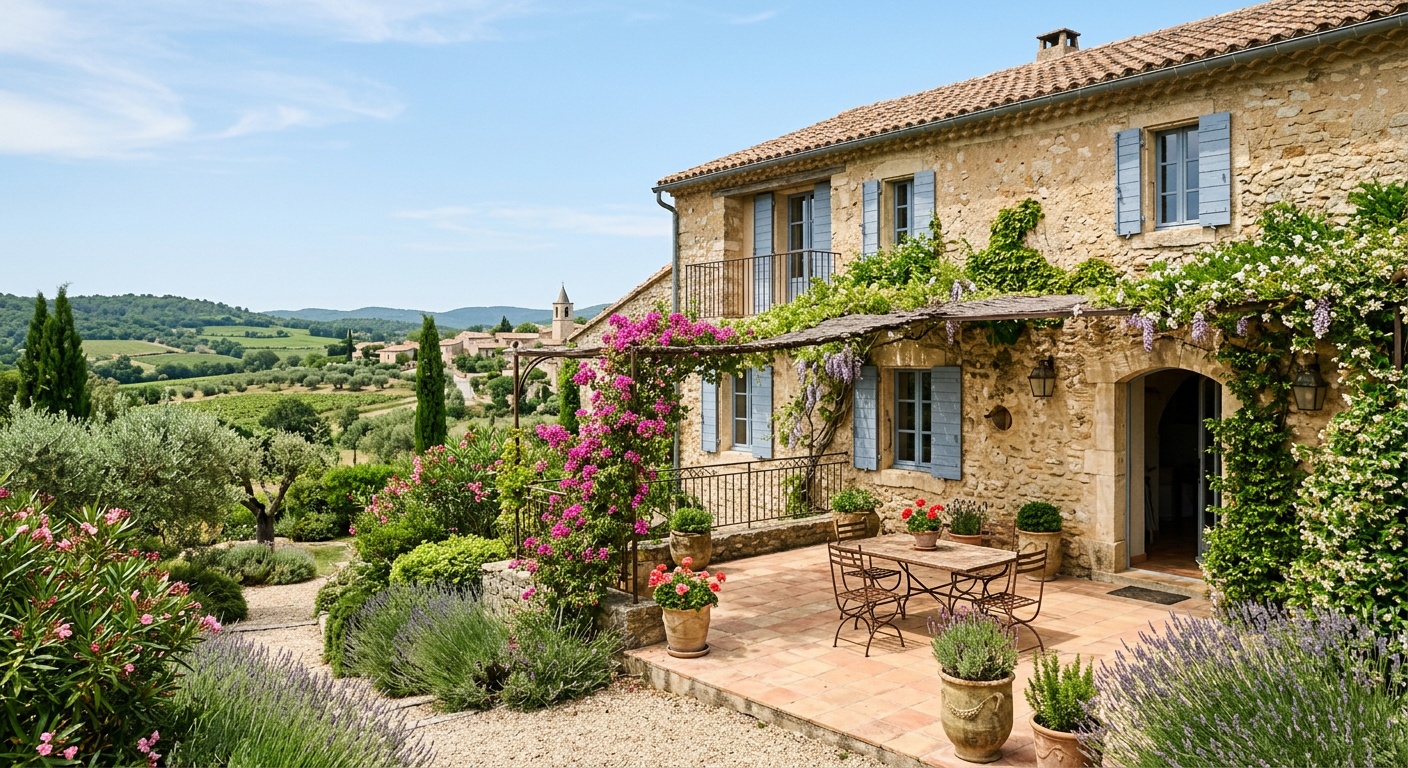
For families who want to be embedded in local life — walking to the boulangerie, watching the pétanque matches in the square, having restaurants within strolling distance — a village house is perfect. These are typically three-to-four bedroom terraced houses in medieval villages, sometimes with a small courtyard or roof terrace. They’re more affordable than rural mas properties, typically ranging from €900 to €2,200 per week in high season. The trade-off is less outdoor space, which matters if you have toddlers or very active children.
Domaine and Château Cottages
A growing number of Languedoc wine estates and historic châteaux have converted outbuildings into self-catering cottages, offering families the extraordinary experience of staying on a working vineyard or historic estate. Some include access to estate pools, wine tastings for adults, and organised activities for children. These represent excellent value for experience-seeking families — typically €1,200 to €3,000 per week.
Eco-Lodges and Alternative Stays
In 2026, eco-conscious family travel has moved firmly into the mainstream. The Languedoc has responded with a proliferating range of eco-lodges, tree houses, and sustainable rental properties, particularly in the Cévennes and Haut-Languedoc areas. These appeal strongly to families with older children interested in nature, outdoor education, and low-impact travel.
Key Sub-Regions and Where to Stay
Languedoc is large — roughly the size of Wales — so choosing your base requires thought. Here’s a focused breakdown of the key family-friendly sub-regions:
| Sub-Region | Best For | Avg. Weekly Rental (4-bed, Peak) | Key Family Attractions | Nearest Airport |
|---|---|---|---|---|
| Hérault | Beach + countryside balance | €2,100–€3,800 | Cap d’Agde, Gorges de l’Hérault, Montpellier | Montpellier |
| Gard | History + Roman heritage | €1,800–€3,200 | Pont du Gard, Nîmes, Gorges du Gardon | Nîmes or Montpellier |
| Aude | Adventure + Cathar castles | €1,400–€2,800 | Carcassonne, Canal du Midi, Gorges de l’Aude | Carcassonne or Toulouse |
| Lozère / Cévennes | Nature + wilderness | €1,000–€2,200 | Gorges du Tarn, Stevenson Trail, wildlife | Nîmes or Montpellier |
| Pyrénées-Orientales | Sun + Spanish border culture | €1,600–€3,000 | Collioure, Canigou, Perpignan markets | Perpignan |
Pricing data based on 2026 aggregated listings from Gîtes de France, Abritel, and HomeToGo platforms.
Quick scenario: A family of five — two adults, two school-age children, one teenager — wants beach access, a pool, good Wi-Fi (teenager survival requirement), and proximity to historical sites. The answer is almost certainly the Hérault department, specifically the triangle between Pézenas, Agde, and the Pic Saint-Loup wine country. It ticks every box within a 45-minute drive radius.
What to Look For: The Family Checklist
Here’s where the practical rubber meets the holiday road. Family needs differ from couple or group needs in specific, non-negotiable ways. Before you fall in love with beautiful stone walls and a vineyard view, run through this checklist:
Safety and Child-Proofing Essentials
- Pool safety: French law (reinforced by the 2024 Piscines Privées Safety Update) requires all private pools to have at least one of four approved safety systems — a perimeter alarm, a pool cover, a fence, or a shelter. Verify which system is in place and whether it meets standards for your youngest child’s age.
- Garden perimeter: An enclosed, fenced garden is non-negotiable with toddlers. Ask specifically whether the garden is fully enclosed and whether there are any open water features (wells, irrigation ponds) that could pose risks.
- Stair gates and cots: Most quality gîtes listed as family-friendly will provide these on request. Confirm before booking — don’t assume.
- Road proximity: Rural Languedoc roads can be deceptively fast. Check whether the property is set back from the road or has a secure drive.
Space and Practical Comfort
- Bedroom configuration: The number of bedrooms matters less than the configuration. Twin rooms (two single beds) are essential for children sharing. Check listings carefully — “four bedrooms” might mean three doubles and a box room.
- Kitchen equipment: Self-catering only works if the kitchen is genuinely functional. Look for: a full-sized oven, a dishwasher, a washing machine (essential for longer stays), adequate fridge and freezer space, a high chair if needed.
- Outdoor dining space: In Languedoc’s climate, outdoor dining is half the pleasure. A shaded terrace with a proper table and chairs (not just a couple of sun loungers) significantly improves daily family life.
- Air conditioning: In 2026, this is no longer optional for July and August stays. Languedoc summer temperatures frequently exceed 36°C. Prioritise properties with A/C in bedrooms, not just the living room.
Location Intelligence
- Distance to the nearest supermarket: With children, you will shop more than you imagine. Being 30 minutes from civilisation sounds romantic in theory and exhausting in practice.
- Wi-Fi quality: Fibre or high-speed connection is now widely available across Languedoc towns and villages. Rural mas properties can still have patchy coverage — ask for the exact internet speed and provider.
- Local family activities within 30 minutes: Waterparks, cycling trails, medieval sites, markets, river swimming spots — the density of these near your base will make or break your family’s daily rhythm.
Pricing, Seasons, and Smart Budgeting
Understanding Languedoc’s rental pricing seasons is the key to unlocking dramatically better value. The market operates in clear tiers:
Peak Season (July 1 – August 31): Highest demand, highest prices. French school holidays drive intense domestic demand alongside international visitors. Availability at quality properties books out 6–9 months in advance. If you must travel in this window, book by November 2025 for 2026 peak season.
Shoulder Season (June and September): The smart family traveller’s sweet spot. Weather is outstanding — typically 28–33°C with lower humidity than August. Crowds are dramatically reduced. Prices drop 25–40% compared to peak. The sea is warm in September (average 24°C in 2025, likely similar in 2026). School-age families tied to term times miss this window, but if you have any flexibility — prioritise it.
Low Season (April–May and October): Exceptional for families with pre-school children or those homeschooling. Prices can be 50–60% lower than peak. Some facilities (waterparks, seasonal restaurants) may not be operational, but the cultural and natural attractions are fully open and gloriously uncrowded.
Family Rental Popularity by Season (Languedoc, 2025 Data)
Source: Occitanie Tourism Board regional data, 2025
Pro Tip: Many Languedoc property owners offer loyalty discounts of 5–10% for returning families, and mid-week start dates (Wednesday or Thursday changeover rather than the standard Saturday) can sometimes unlock better rates or availability on properties that fill up in full-week blocks.
Booking Platforms and Avoiding Pitfalls
In 2026, the booking platform landscape for Languedoc rentals includes several primary channels, each with distinct advantages:
- Gîtes de France (gites.com): The gold standard for accredited, quality-checked rural properties. The épis rating system gives you a meaningful quality baseline. Direct owner contact is standard. Highly recommended for families prioritising reliability over novelty.
- Abritel (abritel.fr): France’s dominant domestic platform, equivalent to VRBO in the US. Extensive Languedoc inventory, solid review system, and payment protection. Strong for finding village houses and smaller family properties.
- HomeToGo: A search aggregator that compares listings across 50+ platforms. Excellent for price comparison. Particularly useful for comparing peak season pricing across multiple booking channels simultaneously.
- Airbnb: Useful but approach with added scrutiny in rural Languedoc. The platform’s review system has improved significantly since its 2024 verification overhaul, but property descriptions can still be inconsistently detailed. Read the reviews specifically looking for comments from other families.
- Specialist French Villa Companies: UK-based operators like Vintage Travel, Chez Nous, and Oliver’s Travels curate Languedoc collections with detailed family-suitability ratings. Higher admin costs but often with more thorough vetting and UK-based customer support.
Case Study — The Martins Family, 2025: Sarah and James Martin, travelling with three children aged 4, 8, and 12, booked a mas near Pézenas through Gîtes de France for two weeks in September 2025. By choosing September over August, they paid €2,100 per week rather than the €3,600 August rate for the same property. They confirmed in advance that the pool had both a perimeter fence and an alarm, that high chairs were available, and that the nearest supermarket was 8 minutes away. Their verdict: “The combination of the accreditation system and direct owner communication gave us confidence we wouldn’t have had booking a random Airbnb. It was the best family holiday we’ve taken.”
Common Challenges and How to Solve Them
Challenge 1: Finding Availability in Peak Season
The most common complaint from families is that quality properties in preferred Languedoc locations are fully booked when they start searching. This is a real and growing problem as the region’s profile rises.
Solution: Set up alerts on Abritel and HomeToGo for your target dates and area starting in October or November the year before your holiday. Gîtes de France allows you to create saved searches with email notifications. Consider building flexibility into your dates — properties with Sunday-to-Sunday changeovers might be fully booked while the same property accepts shorter mid-week stays that other families have overlooked. Also consider lesser-known villages in the interior of Hérault or northern Aude — superb properties, lower competition, 40 minutes from coast.
Challenge 2: Language Barriers and Direct Owner Communication
While tourism English is widely spoken in Languedoc’s larger towns, many rural property owners — particularly those listing through Gîtes de France — primarily communicate in French. This can make direct booking feel daunting for non-French-speaking families.
Solution: Don’t be deterred. Prepare a polished French email template covering your key questions (pool safety, internet speed, proximity to supermarket, equipment availability). Google Translate has improved dramatically in quality by 2026 — a carefully reviewed translated email is entirely acceptable. Most Languedoc owners are genuinely pleased when foreign families make the effort, and it often sets a warm tone for your relationship with the property. Alternatively, UK-based French property specialists can mediate communication.
Challenge 3: Managing Expectations About Rural Infrastructure
Romantic images of isolated mas with vineyard views sometimes collide with the reality of rural France: narrow roads, limited mobile signal, shops that close between noon and 2:30pm, and villages where the weekly market is the social high point. Families with young children who are accustomed to urban amenity density can find genuine rural isolation stressful.
Solution: Be honest with yourself about your family’s dependency needs before booking. If you need a pharmacy, a restaurant option, and a supermarket within 10 minutes, specify that radius in your search. The Languedoc is large enough to offer rural-feeling properties within 15 minutes of small market towns — the sweet spot for most families. Properties in or immediately adjacent to villages like Clermont-l’Hérault, Saint-Chinian, or Olargues offer genuine character without genuine isolation.
Frequently Asked Questions
Is Languedoc a safe destination for families with young children?
Languedoc is consistently rated among France’s safest tourist regions, with low crime rates in rural and village areas. The primary safety consideration for young children is pool safety at rental properties — ensure any pool has French-standard safety equipment in place. Road safety is another consideration: some rural roads are narrow and used by agricultural vehicles, particularly in wine country. Coastal areas around Sète and Cap d’Agde have standard beach safety infrastructure including lifeguard provision on main beaches from June to September. Overall, with sensible precautions standard for any family travel, Languedoc presents minimal safety concerns.
When should we book a Languedoc rental to get the best combination of price and quality?
For peak season (July–August), begin your search and booking process in October or November of the preceding year — effectively 8–10 months ahead. Quality properties in popular areas like the Hérault coast or near Carcassonne can be fully booked by January for summer. For shoulder season (June or September), a 4–6 month lead time is generally sufficient. For low season stays, 1–3 months ahead is usually ample. If you have school-age children and are locked into peak season dates, prioritise early booking above all else — you can always refine your ideal property, but you cannot manufacture availability that doesn’t exist.
What hidden costs should families budget for beyond the rental rate?
Several additional costs routinely catch families off guard. Taxe de séjour (tourist tax) is levied per person per night — in 2026, this ranges from €0.50 to €3.50 per adult per night depending on the department and property classification. End-of-stay cleaning fees are common, ranging from €80 to €250 depending on property size. A security deposit (typically €300–€800) is standard and refunded within 1–3 weeks of departure. Some properties charge separately for bed linen and towels (€15–€25 per person per stay). Electricity surcharges apply in some large properties during heat waves when air conditioning runs heavily. Budget an additional 15–20% on top of the headline rental rate to cover these costs realistically.
Your Languedoc Family Holiday: A Practical Roadmap
You’ve absorbed the landscape — now here’s how to turn knowledge into action. The Languedoc family rental experience is genuinely outstanding when approached strategically, and genuinely frustrating when approached reactively. Here’s your step-by-step path forward:
- Define your family’s non-negotiables this week. Pool safety standard, bedroom configuration, maximum distance from a supermarket, internet speed requirement, air conditioning provision. Write these down before you open a single booking platform. They’re your filter, not your wishlist.
- Choose your sub-region based on the table above. Match your family’s holiday personality — beach-lovers go Hérault, history-obsessed go Aude, nature-seekers go Cévennes/Lozère. Don’t try to base yourself centrally and drive everywhere — you’ll spend your holiday in the car.
- Start on Gîtes de France for accredited properties. Cross-reference on Abritel for pricing comparisons. Set saved searches and alerts on both platforms for your target dates.
- Contact shortlisted owners directly with your key questions. A well-crafted inquiry email sent in French (translated carefully) signals seriousness and often elicits more helpful, detailed responses. Ask specifically about pool safety, nearest services, and any family-specific equipment.
- Book with payment protection in place. Whether through a platform’s built-in system or a specialist operator, ensure your payments are protected against owner cancellation or property misrepresentation. Travel insurance with holiday rental cover is a non-negotiable addition.
The broader trend here is significant: as French family tourism continues growing through 2027 and beyond, and as the Languedoc region benefits from improving high-speed rail connections from Paris and London (the new Montpellier TGV service improvements announced in 2025 are already boosting visitor numbers), prime rental properties will become progressively more competitive. The families who research now, build owner relationships, and prioritise shoulder season flexibility are the ones who’ll secure the best properties at the best prices.
The question worth sitting with is this: what would your family holiday look like if you had a sun-drenched stone terrace, a safely enclosed pool, medieval villages within cycling distance, and the space for everyone to genuinely decompress? In Languedoc, that’s not a daydream — it’s a Tuesday afternoon. The planning starts today.